A couple of years ago, “AI marketing tool” mostly meant a chatbot that gave weird, robotic replies. Now? It’s writing first drafts, editing videos, answering customer questions at 11pm, and even telling you the best time to post on Instagram. Things have moved fast.
If you run a small business — say, a shop or a service in Mannarkkad — you don’t need to know how any of this works under the hood. You just need to know which tools actually save you time and which ones are just hype. So let’s get into it.
Writing content without staring at a blank page
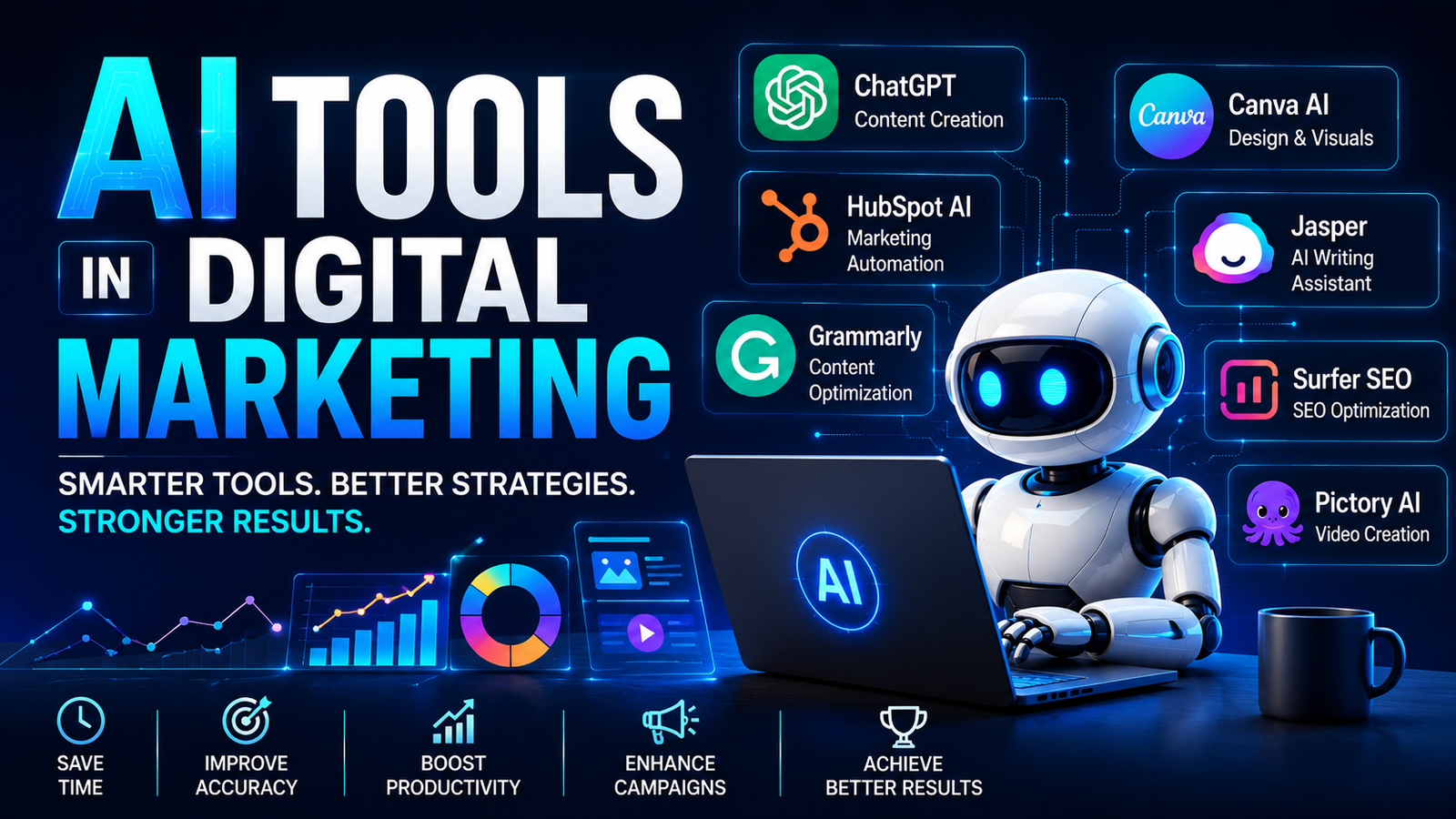
Every marketer knows the pain of the blank page. What do I even write for this week’s post? AI writing tools like ChatGPT and Jasper have basically killed that problem. You give them a rough idea, and they give you a starting point — a draft, a few headline options, a caption that doesn’t sound stiff.
I’ll be honest, though: don’t just copy-paste what these tools give you and hit publish. The content that actually connects with people still needs your voice in it — a real example from your business, a small detail only you would know. Use AI to get past the blank page, then make it sound like you.
SEO is still king, but it's gotten smarter
Nobody wants to show up on page 2 of Google. That hasn’t changed. What has changed is how much guesswork is involved. Tools like Surfer SEO now score your content against whatever’s already ranking, so you’re not just throwing keywords in and hoping. Semrush has gone a step further and started tracking how AI tools like ChatGPT describe your brand — because more people are searching through AI chat now, not just Google.
If you’re just starting out, don’t go buy the expensive plan first. Try the free keyword tools, see what your competitors are actually ranking for, and build from there.
Someone (or something) answering messages at midnight
Ever lost a customer just because you didn’t see their WhatsApp message until the next morning? AI chatbots fix exactly that. Tools like Tidio can handle the “what are your prices,” “what time do you open,” and “do you deliver” questions instantly — and hand off anything serious straight to you.
It’s a small thing, but it means you stop losing leads simply because you were asleep or busy
Photos and videos without hiring a whole crew
This one genuinely surprised me. Tools like HeyGen let you create a talking presenter video — someone explaining your product or service — without a camera, studio, or actor. It even lip-syncs in different languages. A few years back this would’ve needed an entire production budget.
That said — use this for quick social content and testing ideas, not for everything. Real photos of your actual shop, your actual team, your actual customers still build more trust than anything AI-generated ever will.
Running everything from one place
If you’re juggling five apps just to send one email campaign, there’s a simpler way. Platforms like HubSpot now bundle AI into the whole process — writing the email, predicting which leads are worth chasing, even figuring out the best time to hit send — and it’s all based on your actual customer data, not a random guess.
Posting at the "right" time, without the guesswork
AI scheduling tools will tell you when your audience is most active, which trends are picking up, and which posts are working. It’s a good starting point. But keep watching your own numbers too — your audience in Mannarkkad might behave completely differently from what a generic AI tool assumes.
So, where should you start?
Honestly — don’t try to adopt all of this at once. Look at where you’re losing the most time or the most leads. If content is your bottleneck, start with an AI writing tool. If you’re missing messages after hours, a chatbot alone could change things. Master one thing before adding the next.
AI isn’t here to do marketing for you. It’s here to hand you back the hours you used to spend on the boring, repetitive stuff — so you can spend them on the parts that actually need a human: strategy, relationships, and understanding what your customers really want.
Want help figuring out which tools actually make sense for your business? Reach out to Anagha Digital — happy to talk it through.